





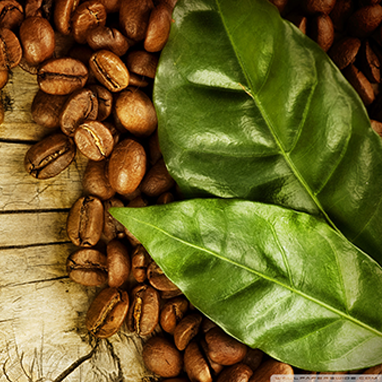
50 kinds of coffee exist in the world and only 2 kinds are used in commercial purposes.
The 70% of human drink arabica in the world that is distinguished by its soft taste and spicy aroma. The 30% prefer slightly bitter coffee robusta, the contents of caffeine in which is considerably high than in arabica.
Actually, the granules of coffee are seeds of the bright red fruit and the taste of fruit resembles the apricot taste.
Coffee is a psychotropic substance, the abuse of which may cause hallucinations.
After oil coffee is a product with the largest turnover in the world.
By legend the coffee grains were noticed by Ethiopian shepherd who saw who the goats revive when they eat the grains.
Initially African tribes ate coffee, having mixed the coffee grains with an oil.
When Islam originated the coffee usage was spread as alcoholic beverages restricted by religious laws were replaced by coffee.
The first web-camera was launched due to coffee. It was placed in Cambridge university so that the employees located in different parts of the building could see if the coffee machines are full or not.
Armenians played a great role in spreading of coffee in Europe. It’s a well-known fact that the founder of the first café opened in 1672 in Saint Germen district of Paris was an Armenian whose name was Harutyun.
Very soon due to reviving and wakening peculiarities of coffee it was widely spread over Foggy Albion and at the end of the 17th century more than 3000 cafes were opened in London.
It should be mentioned that Beethoven who was very fond of coffee has a unique method for coffee making. He mixed 60 grains of coffee with water and drank. Onore de Balzac had 60 cups of coffee a day.
In these days in many European restaurants “chocolate coffee” is obligatorily served with a glass of cognac and like this “Rival” LLC included chocolate coffee in its assortment.
There is a tradition in Japan to take a bath with coffee grains and pieces of dry pineapple.
As a result of daily growing interest to coffee a museum devoted to this drink was opened in 2008 in Saint Petersburg. The director of museum is Igor Ambarov.
Excursions are organized in the museum for the coffee lovers, the coffee history is presented, the various sorts of coffee are introduced as well as different recipes for coffee making at home.
The fact is stating about coffee mass spreading that the 29th of September is acknowledged as an international day of coffee.
Useful recommendations about coffee.
Due to caffeine alkaloid containing in coffee, it has a stimulating influence. The reviving and wakening peculiarities of coffee start to function in 30 minutes and the effect lasts for 2-6 hours.
The coffee helps to overcome tiredness and arises capacity for work.
However, we shouldn’t forget about harmful impact of coffee when abused.
The researches showed that moderate usage of coffee (4-5 cups a day for the people weighing 80kg) contributed to memory improvement and the people who periodically drink coffee the risk of falling sick with pancreatic diabetes is decreased as well as the possibility of occurrence hepatic cirrhosis and cancer. It also prevents from Alzheimer disease.